



How Tight Should a Rash Guard Be? | BJJ Fit Guide
How tight should a rash guard be for Brazilian Jiu-Jitsu? A BJJ rash guard should fit snugly against your body without restricting breathing, movement, or comfort. It should stay in place during grappling, stretch with your body, and avoid loose fabric that can bunch up or get caught during training. The ideal fit is close-fitting, but it should never feel painfully tight.
RollBliss offers BJJ rash guards designed for grappling and training. Whether you practice Gi or No-Gi Jiu-Jitsu, choosing the right rash guard fit can help you stay comfortable during drills, rolling, and regular sessions on the mats.
How Tight Should a Rash Guard Be for BJJ?
A BJJ rash guard should fit like a second layer of skin. It should sit close to your chest, shoulders, arms, and torso without leaving excessive loose fabric. A snug fit helps the shirt stay in position when you move, stretch, or grapple with a training partner. It should also feel comfortable when you raise your arms, bend, and rotate your body.

However, a rash guard should not compress your body so much that it affects your movement or breathing. If the fabric feels restrictive around your chest, shoulders, or neck, the size may be too small. RollBliss recommends choosing a rash guard that balances a close fit with enough flexibility for the movements involved in BJJ.
How Should a BJJ Rash Guard Fit Around the Chest and Shoulders?
The chest area should feel secure without excessive pressure. The fabric should follow your body's shape, but you should still be able to take a full breath and move your arms naturally. A rash guard that pulls tightly across the chest or creates uncomfortable tension when you reach forward may be too small.
The shoulders and sleeves also need enough room for movement. During BJJ, you frequently extend your arms, frame against an opponent, and rotate your upper body. RollBliss rash guards should be selected with these movements in mind, so the fit stays comfortable during training instead of becoming restrictive as the session continues.
Should a Rash Guard Be Tight Around the Waist?
A rash guard should fit closely around your waist without rolling up excessively or creating uncomfortable pressure. The lower part of the shirt should stay in place when you bend, stretch, or move between grappling positions. A rash guard that is too loose may bunch up, while one that is too short or too tight may ride upward during training.
For BJJ, a longer rash guard can help provide more coverage during movement. The right length depends on your torso and personal preference, but it should not interfere with your mobility. RollBliss offers rash guards for grapplers who want a practical fit for regular Gi and No-Gi sessions.
How Do You Know if a Rash Guard Is Too Tight?
A rash guard may be too tight if you notice pressure around your chest, shoulders, or neck, or if it becomes difficult to move your arms comfortably. You may also see excessive stretching across the fabric, seams pulling, or discomfort when taking a deep breath. These signs suggest that you may need a larger size or a different fit.
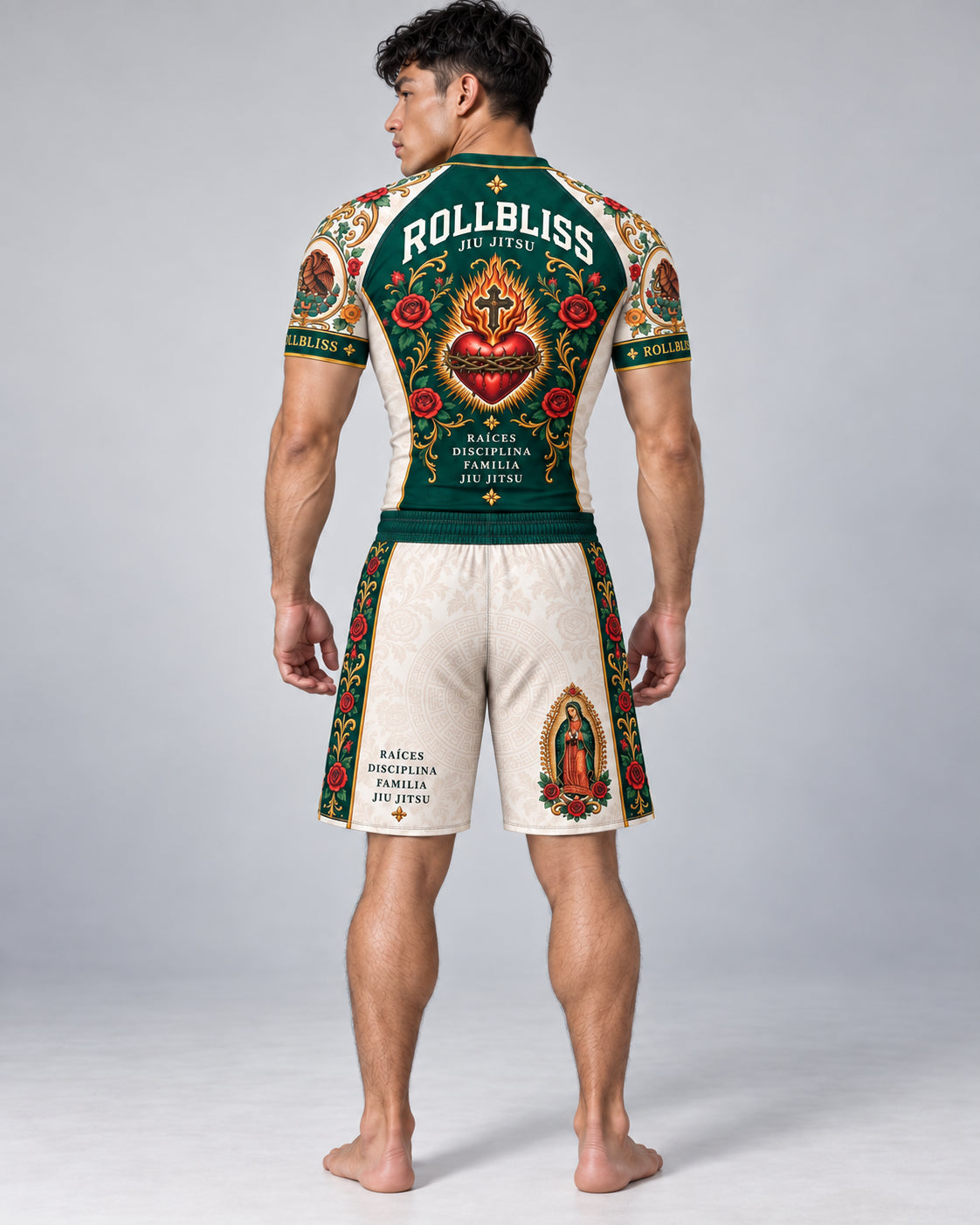
A proper rash guard should allow you to perform basic movements without feeling restricted. Try reaching overhead, crossing your arms, bending forward, and rotating your torso before training. RollBliss encourages choosing gear that supports your movement and comfort, rather than selecting a smaller size simply because compression clothing is supposed to fit snugly.
Can a Rash Guard Be Too Loose for BJJ?
Yes, a rash guard can be too loose for grappling. Excess fabric may fold or bunch during rolling, which can become distracting and make the shirt less comfortable. Loose clothing can also move around more during training, especially when you are working through scrambles or changing positions quickly.
A close-fitting rash guard is generally more practical for BJJ because it stays nearer to your body. However, it should not feel like a tight compression garment unless that is the fit you prefer and it remains comfortable. RollBliss rash guards are intended for grappling use, so consider both fit and flexibility when choosing your size.
Should You Size Up or Down in a BJJ Rash Guard?
Your usual clothing size can be a useful starting point, but rash guard sizing varies between brands and designs. Some people prefer a more compressive fit, while others choose a slightly relaxed fit that still stays close to the body. Always check the brand's size chart and compare your measurements before ordering.
If you are between sizes, consider your preferred fit and the garment's stretch. Sizing down may create excessive pressure, while sizing up may leave more fabric than you want. RollBliss recommends using the product's sizing information and considering your chest, waist, and torso length to make a more informed choice.
Is a Tight Rash Guard Better for Gi or No-Gi BJJ?
A snug rash guard can be useful for both Gi and No-Gi BJJ. In No-Gi training, close-fitting clothing helps reduce loose fabric during grappling. In Gi training, a rash guard can be worn under the gi to provide an additional layer and help manage moisture during practice.
The main difference is not how tight the rash guard should be, but how you plan to use it. Choose a fit that stays comfortable beneath your gi or during direct No-Gi grappling. RollBliss offers BJJ rash guards for practitioners who want suitable training apparel across different grappling styles.
How Should You Wash a BJJ Rash Guard to Maintain Its Fit?
Proper washing helps preserve the fabric's stretch and fit over time. Follow the care label, use a gentle wash cycle when recommended, and avoid high heat. Excessive heat from washing or drying can affect some stretch fabrics and may cause them to lose their original shape.
After training, wash your rash guard promptly to remove sweat and body oils. Let it dry according to the garment's care instructions, preferably avoiding high-temperature drying unless the label permits it. RollBliss encourages proper care of BJJ gear so your rash guard can remain comfortable and suitable for regular training.
Final Thoughts
So, how tight should a rash guard be? For BJJ, it should fit snugly, stay in place, and stretch with your body without restricting breathing or movement. Avoid both excessive looseness and uncomfortable compression. The best fit is one that feels secure during drills and rolling while allowing you to move naturally.
RollBliss offers BJJ rash guards for practitioners who want comfortable gear for Gi and No-Gi training. Check the size chart, consider your preferred fit, and choose a rash guard that supports your movement throughout every session.
Frequently Asked Questions
1. Should a BJJ rash guard be skin tight?
It should fit close to your body, similar to a second layer of skin, but it should not cause discomfort or restrict movement.
2. Should I buy a smaller rash guard for compression?
Not automatically. Check the size chart and measurements first. A smaller size may be too restrictive, especially around the chest and shoulders.
3. Can I wear a loose rash guard for BJJ?
You can, but a very loose rash guard may bunch up during grappling. A snug fit is generally more practical for training.
4. Should a rash guard cover my stomach during BJJ?
Ideally, it should stay in place and provide coverage when you bend, stretch, and move. A longer design may help reduce riding up.
5. Does a rash guard stretch after wearing it?
Some stretch fabrics may relax slightly with use, but the amount depends on the material and construction. Follow the care instructions to help maintain its fit.
6. Is a rash guard necessary for No-Gi BJJ?
Rash guards are commonly worn for No-Gi BJJ because they provide a close-fitting layer for grappling. Check your gym's clothing requirements before attending class.


Leave a comment